
Effortless Style for Real Life
How to dress in your 30s & 40s when your body has changed
Your clothes fit differently, the styles have moved on, and getting dressed feels harder than it used to. Here is a gentler place to start: five easy outfits, current styling ideas for 2026, and practical ways to feel like yourself in the body you have today.
By Rosie Karma · Updated October 19, 2026
Find your everyday formula →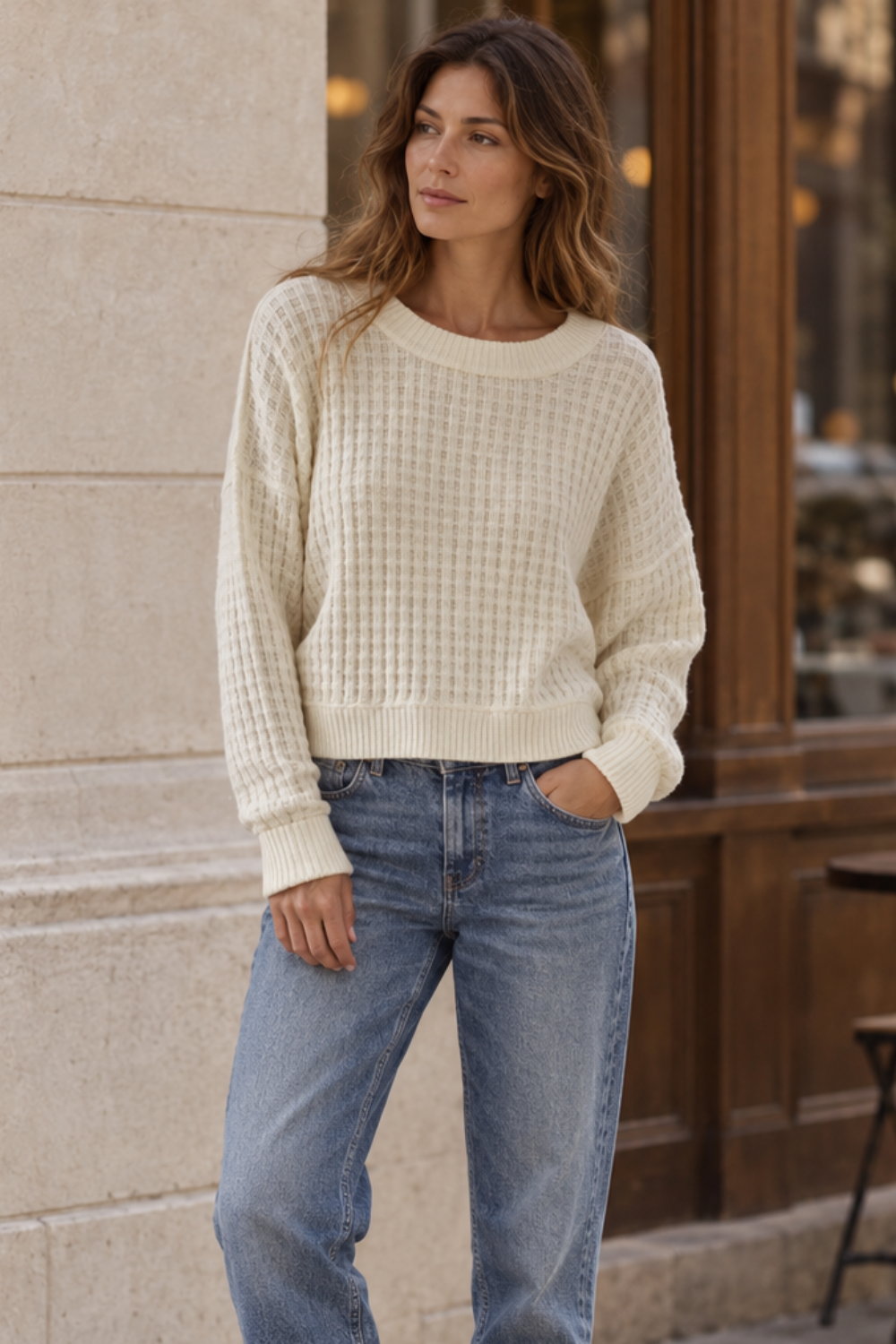
01 / FIND YOUR WAY BACK TO YOUR STYLE
“I still know what I like. I just don’t know how to wear it anymore.”
You reach for an outfit that used to feel effortless, and something has changed. The waistband sits differently. The top pulls where it never used to. You save a look you love, then wonder how it would work on you. It can feel as though you need to learn how to get dressed all over again.
For some, that feeling follows pregnancy or childbirth. For others, it comes during perimenopause, after a weight change, or for reasons that have nothing to do with either. Your experience is your own. You do not need to explain it to deserve clothes that feel good.
Wanting to look current can add another layer of uncertainty. You still want the interesting jeans, the cool jacket, the outfit that feels right for dinner. You also want to sit comfortably, have the coverage you enjoy and leave the house without rearranging your clothes.
Keep the style you love. Reconsider the fit, length and way the pieces meet. Start with one comfortable bottom and one top that fits you now, then add a current detail that makes you excited to wear them.
You can start with the body you have today. You deserve a few outfits that feel good now, whether your body changes again or stays much the same. A size label is information for finding a garment, not a measure of how well you are doing.
02 / FIND A COMFORTABLE STARTING POINT
Keep your personality. Adjust the fit.
Begin where the outfit feels uncomfortable.
Is it a digging waistband, pulling at the bust, a hem that rides up or a neckline that needs constant adjusting? Name that one issue first. Try another cut or size before deciding that the whole style no longer works for you.
Give yourself a familiar foundation.
Start with jeans, trousers or a skirt that feel comfortable seated as well as standing. Keep that bottom while you try a new knit, jacket or accessory. One successful pairing is enough for today.
Try one current detail.
A straight or wide leg, an asymmetric neckline or a textured jacket can give a familiar outfit a fresh direction for 2026. Choose the detail you actually like. You can enjoy a trend without copying the whole look.
Choose your coverage first.
A longer top, a covered shoulder or room through the middle can be part of a stylish outfit. Build interest through fabric, color and accessories, then adjust the hems so the pieces sit comfortably together.
03 / FIVE LOOKS TO PUT ON REPEAT
Easy outfits, with the finishing details figured out.
Choose the look that feels closest to you. Each has a comfortable starting point, a little personality and a way to adjust the fit or coverage. Try the idea with your own favorites, or explore the pieces below in the sizes and colors that work for you now.
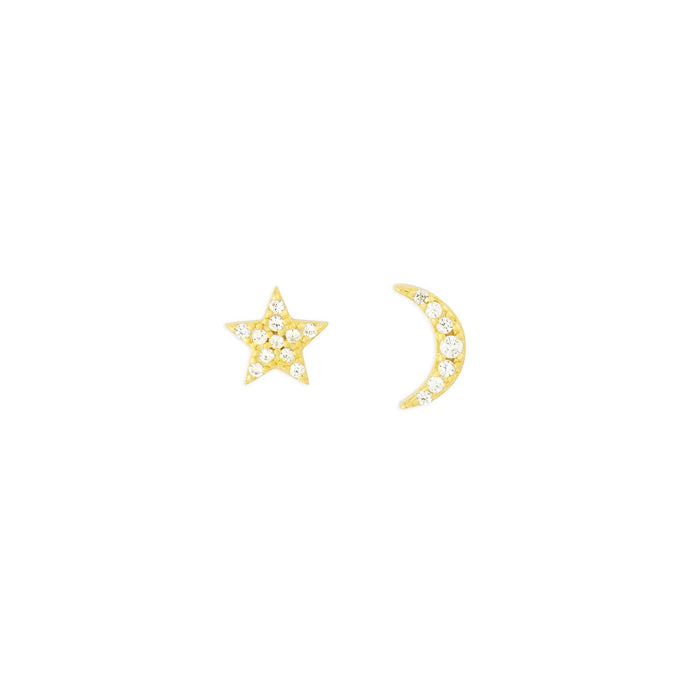
Look 1 / School drop-off, errands & coffee
The everyday outfit that feels finished
Ivory • blue denim • warm brown • gold
Your outfit formula
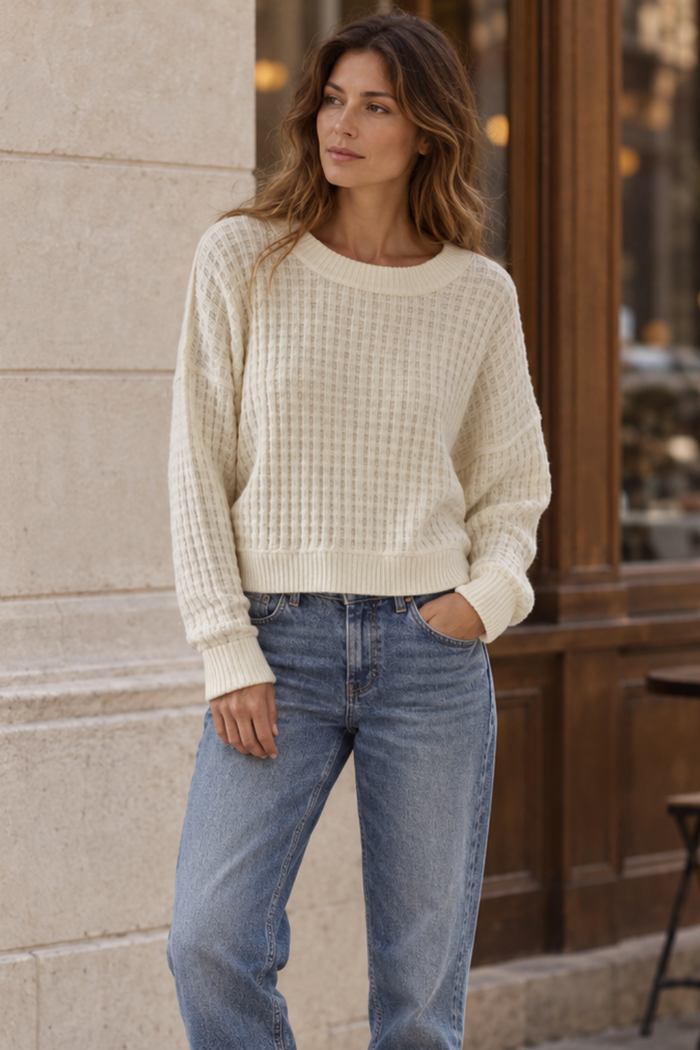
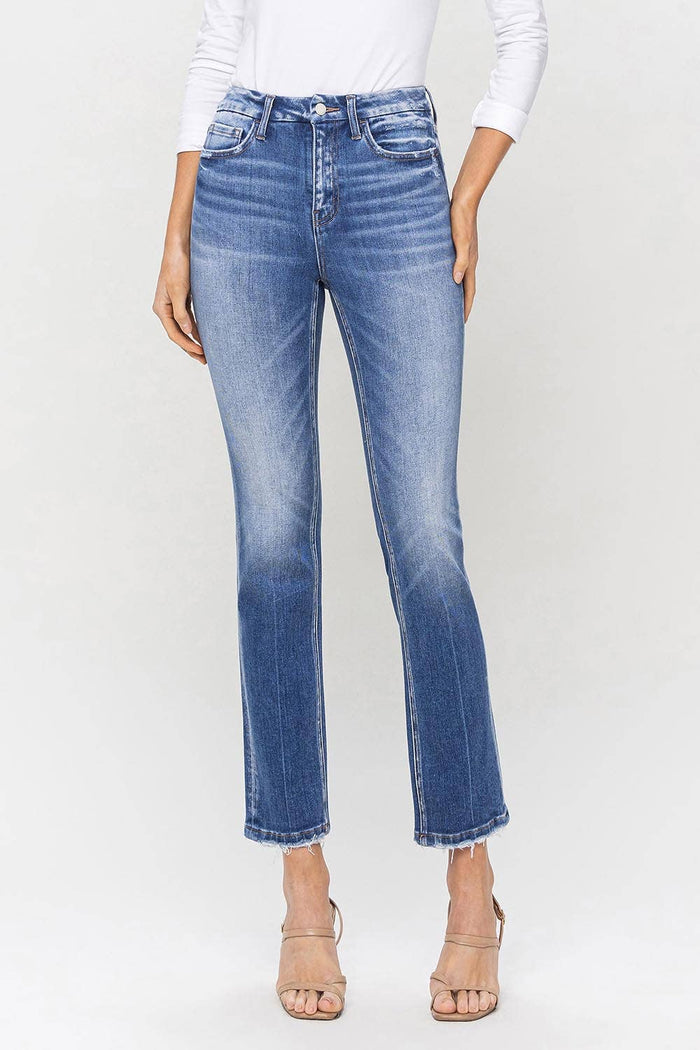
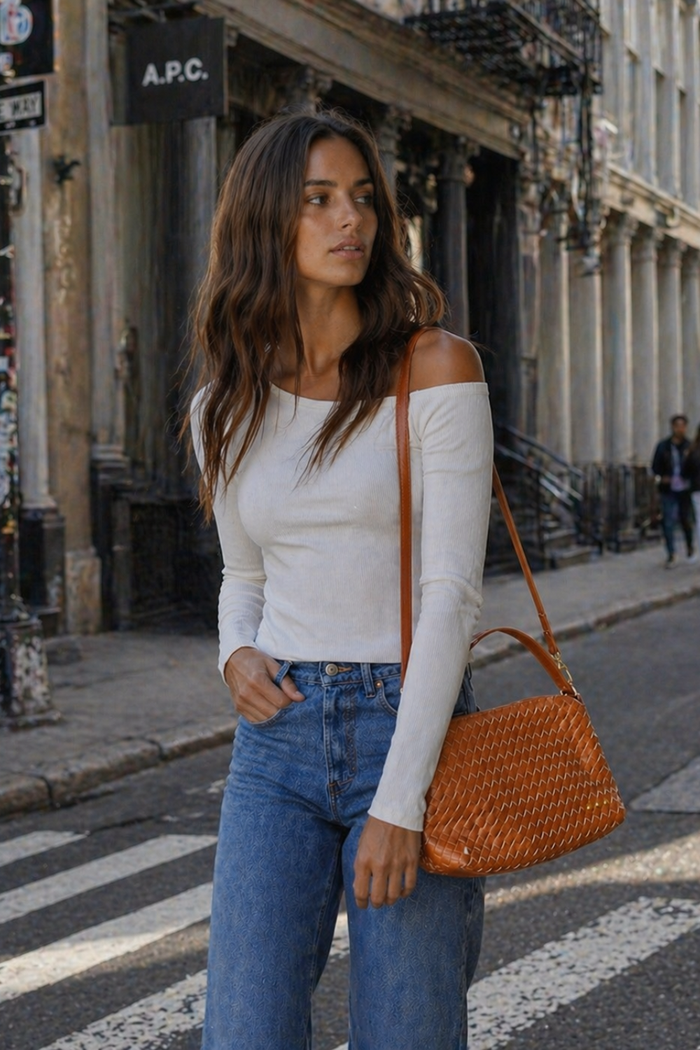
A textured ivory knit + slim straight blue denim + a brown woven bag + small gold studs.
Why the pieces work together
The relaxed knit supplies softness, while the narrower straight leg gives it a clean base. The woven bag adds a second texture; the earrings make the finish feel deliberate. The interest comes from texture and proportion, so the palette can stay simple.
The styling move
Start with the sweater loose. If it catches at the waistband, try a small side tuck using just a little fabric; keep the back relaxed. Leave thick ribbing outside the jeans. Push the sleeves back slightly if they stay comfortably, so your hands and jewelry remain visible.
Choose your shoes
Choose ivory low-profile sneakers for a busy day or brown loafers for lunch. Check that the jeans fall cleanly rather than bunching on the shoe. Keep socks plain and comfortable.
Make it work for your body today
If your middle feels different in your old jeans, compare a different rise or waistband shape while keeping the knit and accessories. Leave the sweater untucked for coverage. It should fall freely rather than catch; a softer or longer version can keep the same feel.
Wear it again
Swap the sweater for a plain ivory tee when it is warmer. Keep the jeans, bag and earrings together as a ready-made starting point.
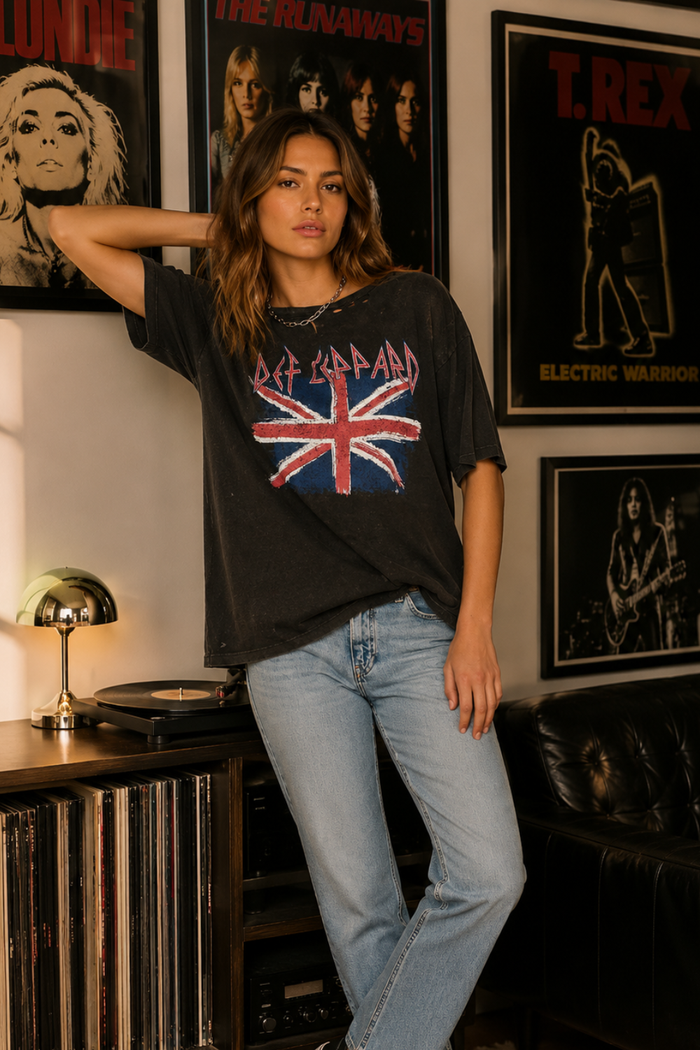
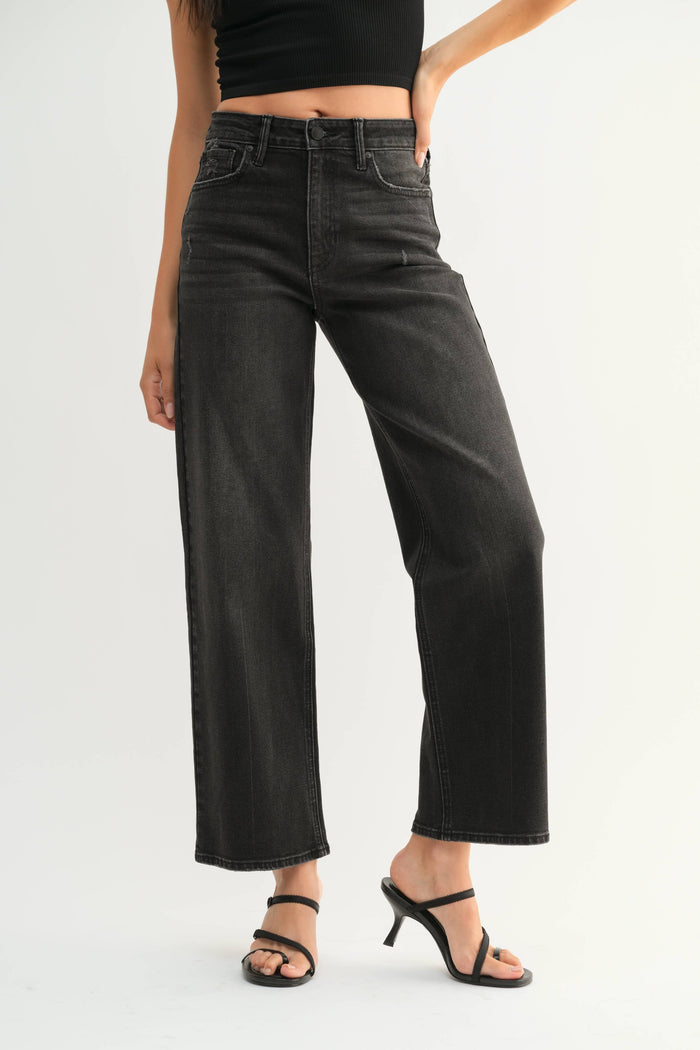
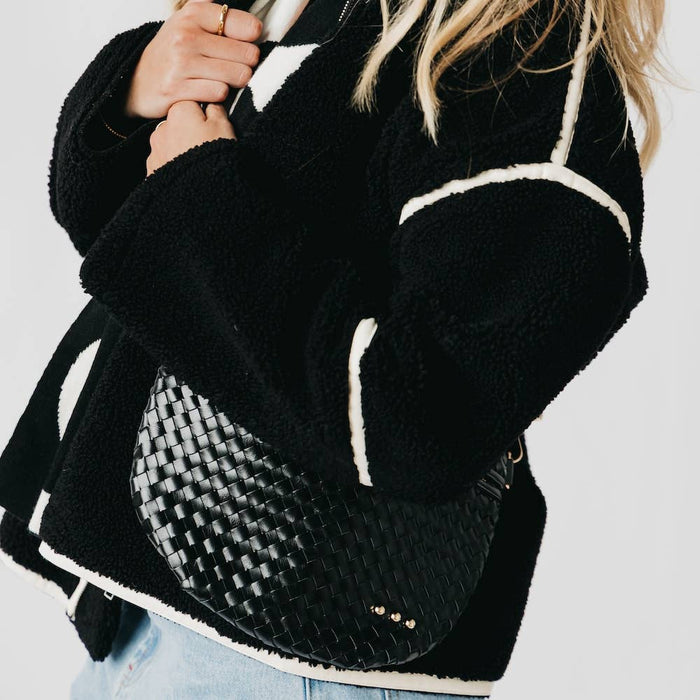
Look 2 / Lunch, a casual concert & weekend plans
The graphic tee, with a sharper finish
Charcoal • washed black • gold
Your outfit formula
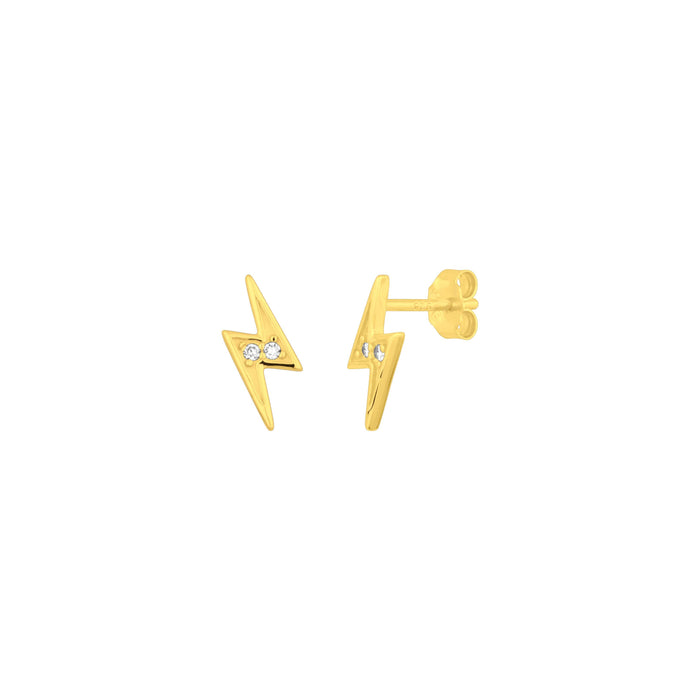
A charcoal band tee + washed black straight jeans + a black woven crossbody + tiny lightning studs.
Why the pieces work together
A graphic tee has plenty of personality on its own. Similar dark tones keep the rest of the outfit connected, and a clean shoe gives the distressed tee a little polish. The small lightning studs add a playful detail without another large statement.
The styling move
Try a loose front tuck that shows a little waistband, then ease the fabric back out so it does not pull across your middle. Prefer no tuck? Let the tee fall freely and keep the jeans and shoe line neat. These JBD jeans are listed as running small, so check their size guidance.
Choose your shoes
Black loafers give the tee a sharper finish. For walking or standing, use plain black or ivory sneakers you find comfortable. A simple black ankle boot works when the straight hem clears its shaft.
Make it work for your body today
If the tee now pulls across your bust or catches through the middle, try more ease or a different cut. Keep the graphic you love and the dark palette. A tuck is optional; you can create a finish with loafers and a bag while leaving the tee loose.
Wear it again
Wear the tee under a plain open jacket when you need warmth. Keep the extra layer simple so the graphic remains the focal point.

Look 3 / A casual office, lunch or an early dinner
The knit-and-skirt combination
Black • cream • gold
Your outfit formula
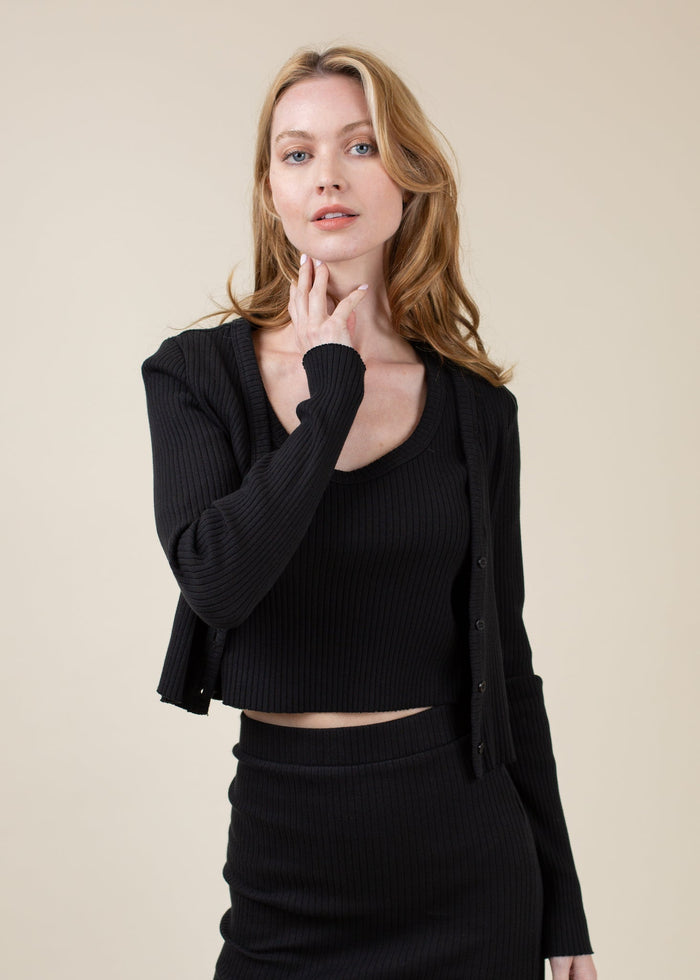
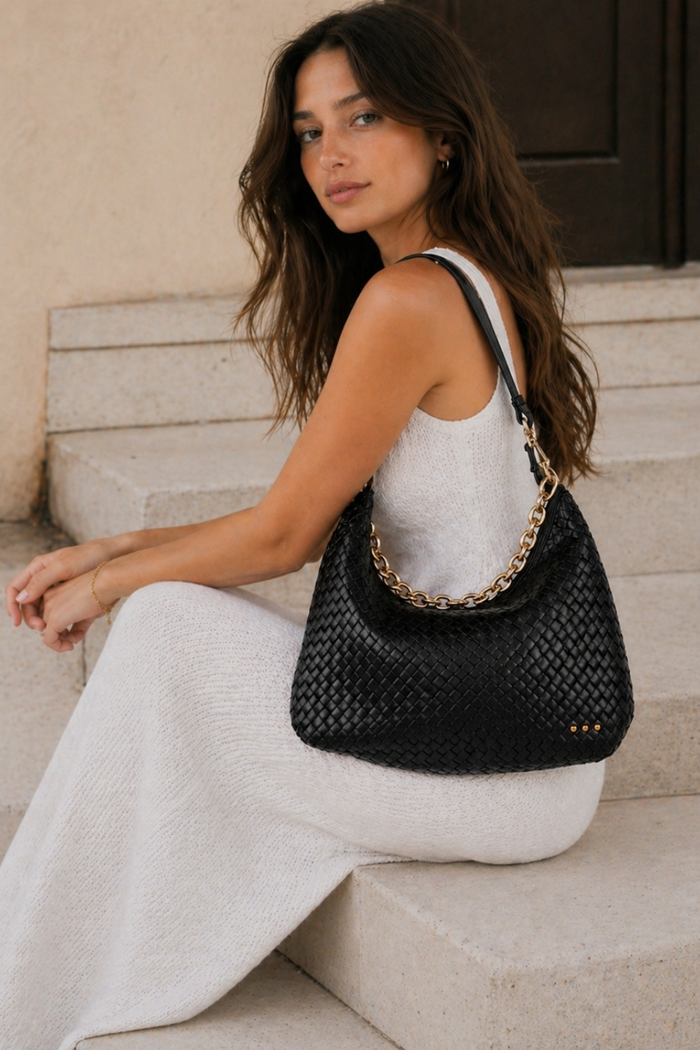
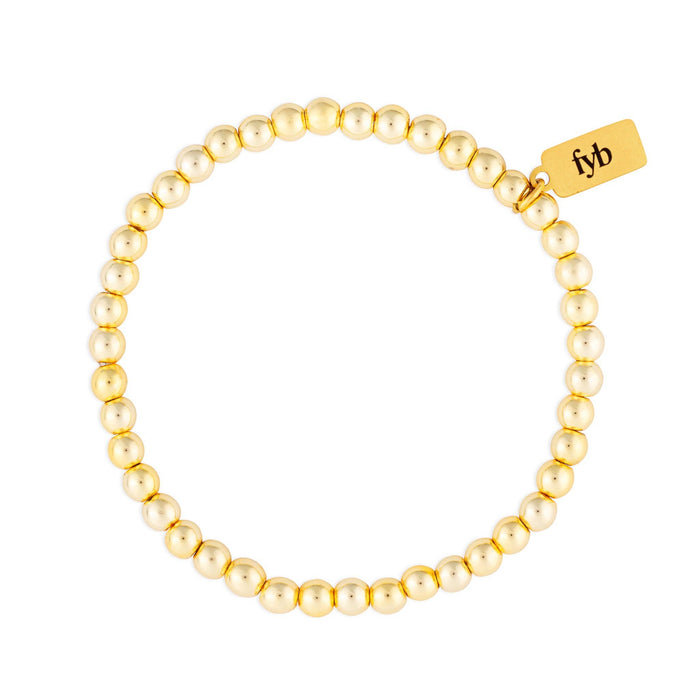
A neat black cardigan + a fluid cream midi + a black woven shoulder bag + one gold bracelet.
Why the pieces work together
The cardigan gives the outfit a clear upper shape; the satin adds movement below it. Repeating black in the bag and shoes connects the look, while the bracelet adds a small finish at the wrist. It feels dressed without relying on a high heel.
The styling move
Wear a comfortable camisole under the cardigan and button only where the knit sits flat. Let the shorter hem meet the skirt waistband or high hip. Avoid packing a thick knit into the satin waistband, and check the cream fabric in daylight for the opacity you prefer.
Choose your shoes
Black ballet flats or loafers make an easy daytime version. Switch to slim black boots when it is cold, checking that the skirt moves freely over the shaft. Choose layers and coverage that suit your workplace.
Make it work for your body today
If your waist and hips now need different sizes, fit the skirt through the hips and check the waistband separately. Try another cut if it pulls or digs in. Wear the cardigan open over a comfortable base for more room through the bust and middle.
Wear it again
Swap the midi for straight jeans and keep the cardigan, bag and bracelet. That gives you a second outfit with the same finishing pieces.
Look 4 / Date night, dinner with friends & drinks
Dinner plans, with jeans you can relax in
Cream • blue denim • mocha • a little gold
Your outfit formula
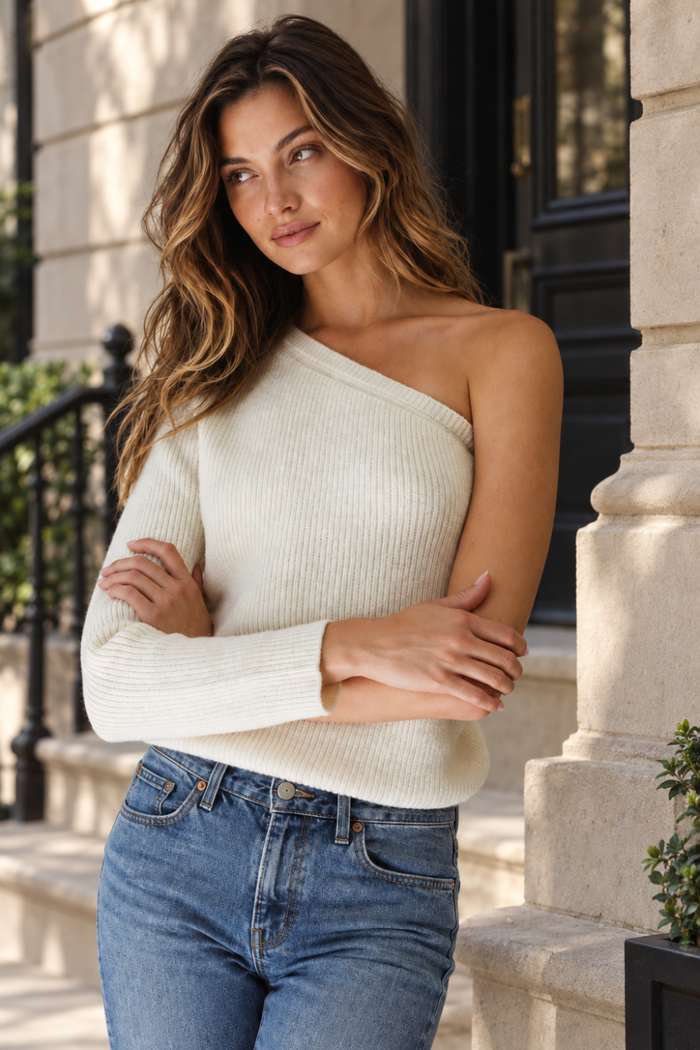
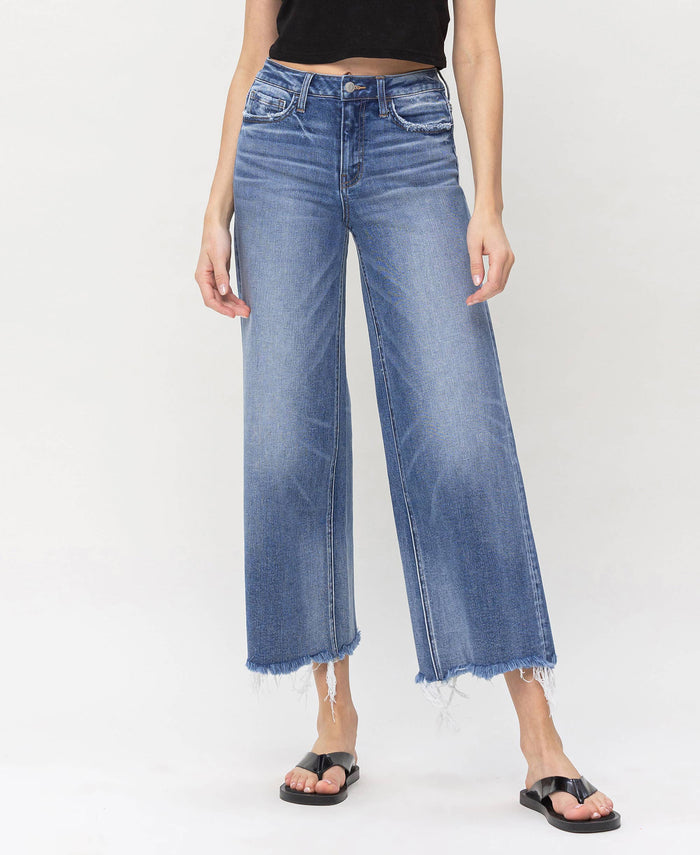
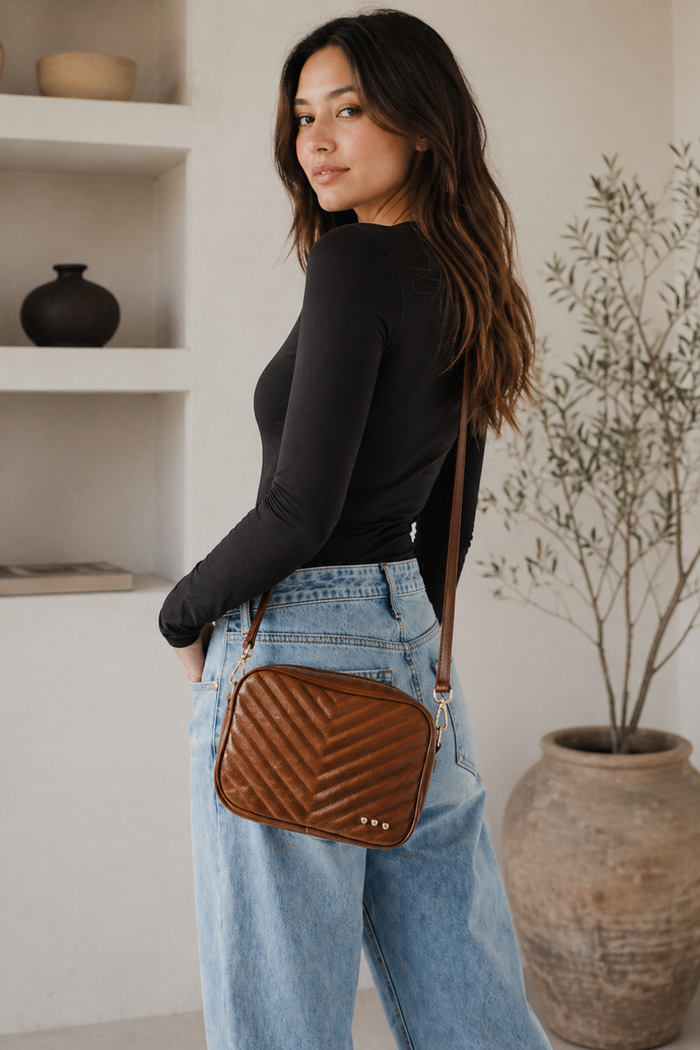
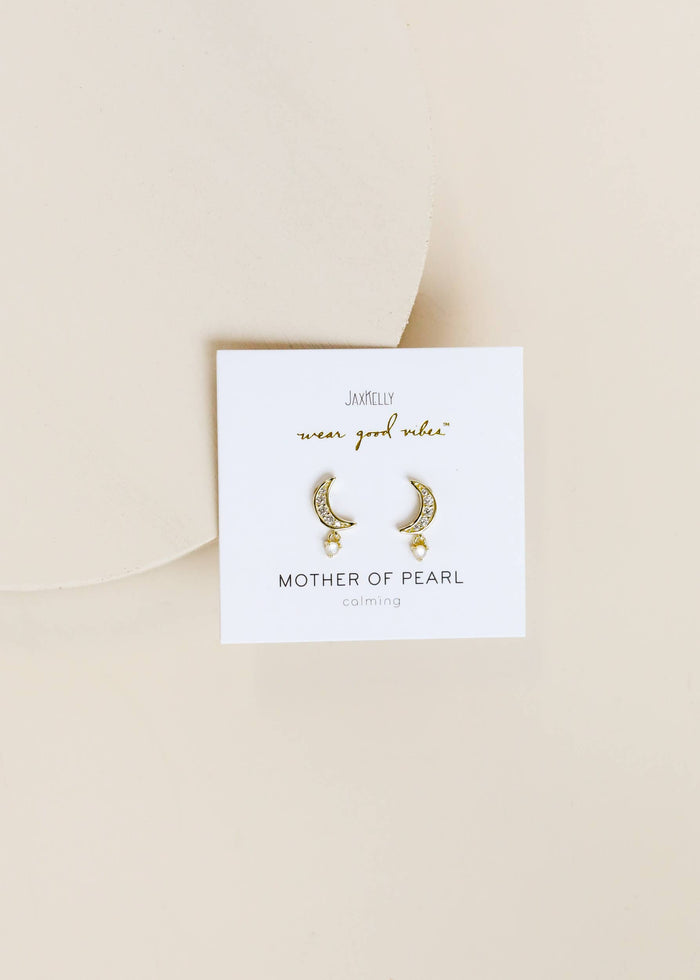
A cream asymmetric knit + cropped wide leg denim + a mocha bag + small mother-of-pearl earrings.
Why the pieces work together
The neckline makes the outfit feel special; the familiar denim keeps it relaxed. Mocha adds warmth, and the earrings pick up the cream top without putting a necklace across its asymmetric line. The wide leg brings movement while the top remains the main feature.
The styling move
Try the neckline with the undergarment you intend to wear, then sit and reach to check it stays comfortable. Let the knit meet the high hip or use a small tuck if it lies smoothly. Keep the rest of the neckline free of extra layers.
Choose your shoes
Choose brown pointed or almond-toe flats, or a slim brown ankle boot that sits neatly beneath the hem. A low heel is optional. Check the actual inseam on you; cropped denim can land differently with height.
Make it work for your body today
Want shoulder coverage or different support? Choose a cream boatneck, draped neckline or another interesting knit that works with your preferred undergarment. Keep the jeans and warm accessories. For more ease, try wider denim that hangs freely from the hip.
Wear it again
Change to a simple cream top and brown loafers for daytime. Keep the bag and earrings together, so changing the top is the only decision.
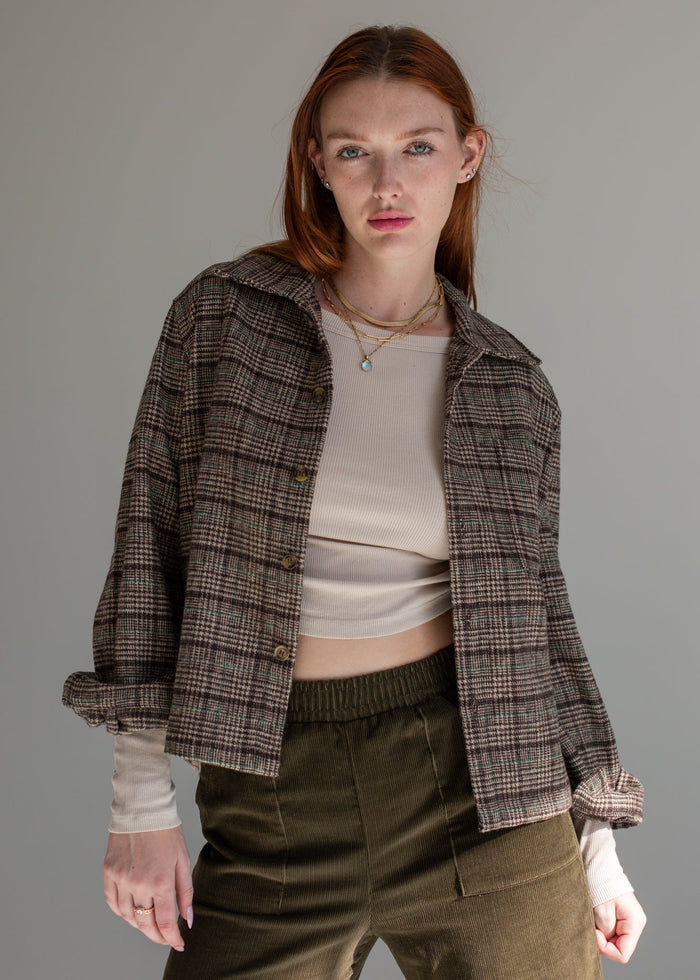
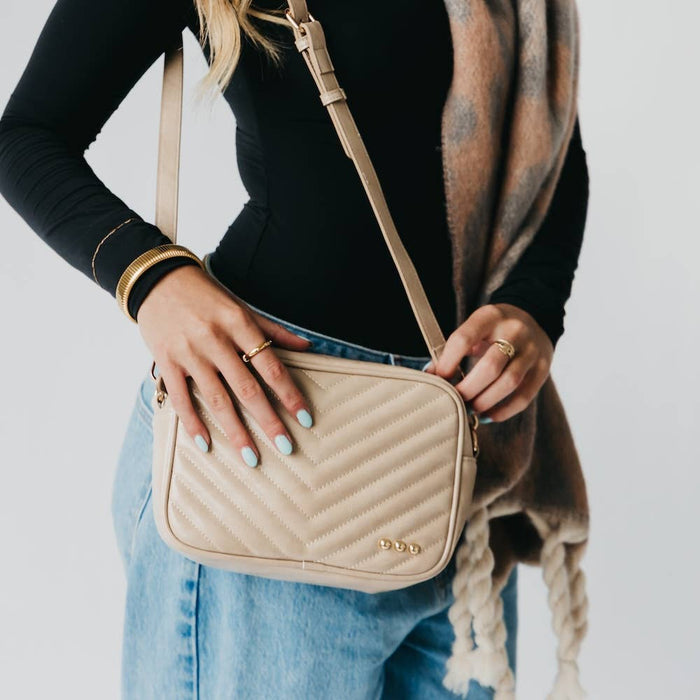
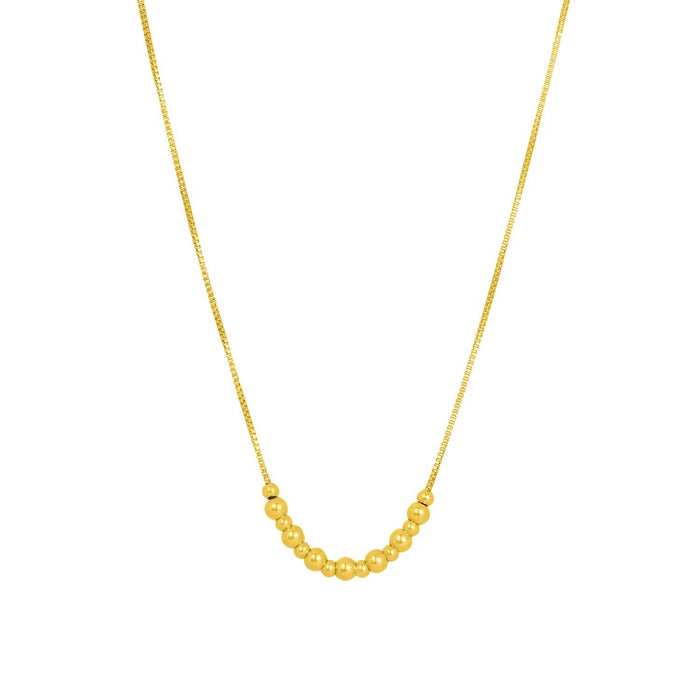
Look 5 / Weekend outings, an informal meeting & travel days
The jacket that pulls the basics together
Brown plaid • white • blue denim • taupe
Your outfit formula
A brown plaid jacket + a plain white top you own + slim straight denim + a taupe bag and fine gold necklace.
Why the pieces work together
The jacket adds shape and pattern to two familiar basics. White beneath the plaid keeps the center of the outfit light, and the taupe bag repeats the warmer neutral family. A fine necklace gives a small finishing detail without competing with the jacket.
The styling move
Choose a smooth white tee or fine long sleeve from your wardrobe. Keep the jacket open and let its front hang freely. Use a small tuck only if it helps the base sit comfortably. The necklace should sit clear of the tee collar.
Choose your shoes
Brown loafers make the easiest polished version. Ivory sneakers suit a day of walking, while a simple brown boot adds warmth. Keep the bag and footwear in a similar warm tone; they do not have to match exactly.
Make it work for your body today
If you want more room through the middle, wear the jacket open over a softly skimming, untucked base. Fit it over your actual layer, especially through the bust and upper arm. A longer jacket can recreate the idea if that is the coverage you enjoy.
Wear it again
Use the jacket with plain dark trousers you own for a slightly dressier version. When the jacket comes off, the necklace and considered shoe still give the basics a finish.
04 / THE OUTFIT RESET
Change one thing before starting over.
Try the adjustment that matches what you are seeing in the mirror. Small changes are easier to judge one at a time.
| What feels off? | Try this first | Why it helps |
|---|---|---|
| “The whole outfit feels too unfamiliar.” | Keep your favorite jeans and shoes. Introduce just the new top, jacket or bag. | A familiar base makes it easier to decide whether you actually enjoy the new detail. |
| “Everything feels big.” | Compare a shorter top hem, an open outer layer or a slimmer shoe. Change just one. | You can keep the room you enjoy while making the silhouette clearer. |
| “My basics look unfinished.” | Try the outfit with a considered shoe, a bag that picks up a color and one piece of jewelry. | The finish becomes part of the outfit rather than a last-minute addition. |
| “My favorite cut no longer feels right on me.” | Check the rise, hip room and waistband while seated. Try another cut with the same top and shoes, changing one thing at a time. | You can keep the mood of your old outfit while finding a fit that feels better now. |
| “I want coverage without feeling swamped.” | Try a skimming base with an open jacket, or a softer untucked top with a cleaner leg. | The fabric can fall freely while the outline of the outfit remains visible. |
| “It looks good standing still, but I keep fixing it.” | Sit, reach and walk. Change the cut, size, layer or tuck where it pulls. | A look you can move in is easier to wear with confidence throughout the day. |
05 / MAKE TOMORROW MORNING EASIER
Build three outfits you can reach for without thinking.
- Start with your real week and your comfort today. Choose one walking-and-errands look, one more polished everyday look and one dinner outfit. Adjust the occasions to your life.
- Finish each outfit now. Try on the actual shoes, bag, jewelry and outer layer. Check your weather and where you will be sitting or walking.
- Keep a reminder. Save a photo if that feels useful, or write a quick note of the pieces. Keep the accessories easy to find so you can repeat the outfit without a fresh decision.
- Change one piece next time. Swap the top, shoe or jacket and keep the rest. Repeating a good outfit is a practical way to develop a style that feels like you.
Before buying: ask, “Can I make three outfits with this using pieces I already own?” A useful new piece should make getting dressed easier.
You can recognize yourself in a different fit.
A changed body does not erase your taste. If you have always loved a little rock-and-roll edge, keep the band tee. If simple, clean outfits feel most like you, keep that palette. Let the cut and styling evolve around the person wearing them.
- If your waist feels different: compare rises and waistband shapes, then test them seated. A higher rise is one option, not an automatic answer.
- If your bust or shoulders fit differently: start there when choosing tops. Check movement, button tension and whether the neckline works with the support you like.
- If your clothes feel closer than you enjoy: try more ease, a softer drape or another fabric. You can choose a skimming fit without wearing everything oversized.
- If your comfort varies from day to day: keep an easy alternative ready, such as a different waistband or a softer bottom with the same knit and accessories.
- If you feel overwhelmed: put aside pieces that make trying on difficult and work with one complete outfit. A tailor can help with some fit issues, but you do not have to rescue every garment.
Choose measurements and fit for today. Having a few things that feel comfortable and look like you is a worthwhile place to begin.
Dressing a changing body: your questions
How can I dress after pregnancy or childbirth when my old clothes fit differently?
Begin with one comfortable bottom and a top that fits your bust and shoulders now. Check the waistband while sitting and the neckline with your preferred undergarment. If useful, choose openings or layers that work with feeding or pumping. Keep the colors and details you enjoy, and give yourself permission to choose different sizes or cuts.
How can I find my style during perimenopause?
If your usual outfits feel unfamiliar or uncomfortable, start with what you are noticing rather than following a new set of age rules. Compare waistband shapes, fabric weight, room through the body and layers you can easily remove. Add one current detail to a comfortable outfit; you can explore new styles without replacing your whole wardrobe.
Do these ideas work for other body changes, too?
Yes. These ideas are for anyone who feels unsure how to dress a body that has changed, whatever the reason. You do not need to fit a particular life stage or explain your circumstances. Start with the fit issue, coverage preference or outfit that feels relevant to you.
How can I dress stylishly in my 30s and 40s without feeling like I am copying someone younger?
Start with an outfit you already feel good in and introduce one current detail: a different denim shape, an interesting neckline or a textured jacket. Then choose shoes and accessories that connect to the rest of the outfit. There is no age limit on individual pieces; the useful question is whether you like the whole outfit and can wear it comfortably.
Can I still wear graphic tees, wide leg jeans and sneakers?
Yes. Try a graphic tee with plain straight jeans and loafers, wide leg denim with a simpler top, or sneakers with a textured knit and a considered bag. You can also wear several relaxed pieces together; pay attention to the hem lengths, colors and amount of volume so the result feels like a choice.
How do I look put together when I have five minutes?
Keep two or three complete outfits ready, including the shoes, bag and jewelry. If it helps, take a photo of each or write down the combination so you can repeat it without starting over. A reliable formula is a favorite top, jeans or a skirt that fits, a shoe suited to your plans and one finishing detail.
Do I need to tuck in my top to look polished?
No. An untucked top can look just as considered when it falls freely and works with the bottom. Check for a hem catching at the waistband or covering more of the leg than you intended. Try a shorter cut, softer drape or an open outer layer before forcing a tuck you dislike.
How can I look stylish with more coverage?
Choose the coverage first, then build interest through texture, shape and accessories. A fine long sleeve under a plaid jacket, a boatneck knit with wide leg jeans, or a midi skirt with boots can all feel current. Fit at the shoulders and a clear hemline often make more difference than showing skin.
What if my body has changed and my old outfits no longer feel right?
Begin with what feels uncomfortable: the rise, waistband, bust, shoulder or length. Try a different cut or size that addresses that issue, then keep your favorite colors and details around it. You can still recognize your style in an outfit with a different fit.
Do I need expensive clothes to make these looks work?
No. Fit, garment condition, color choices and the way pieces sit together matter more than a logo. Remove visible lint, smooth a creased top according to its care label and check that your shoes are clean. Buy the item that makes your existing outfits easier.
What if a featured piece is not available in my size?
Keep the color and outfit idea, then use a similar piece with a fit you enjoy. Open any item below to see its available sizes and colors, or explore the related guides and collections for another option.